Great for bookkeeping. Never built for a weighbridge.
Generic accounting software deserves more credit than it usually gets in conversations like this one. It is reliable, widely understood and good at statutory filing. For a huge range of businesses, it is the right tool for the job.
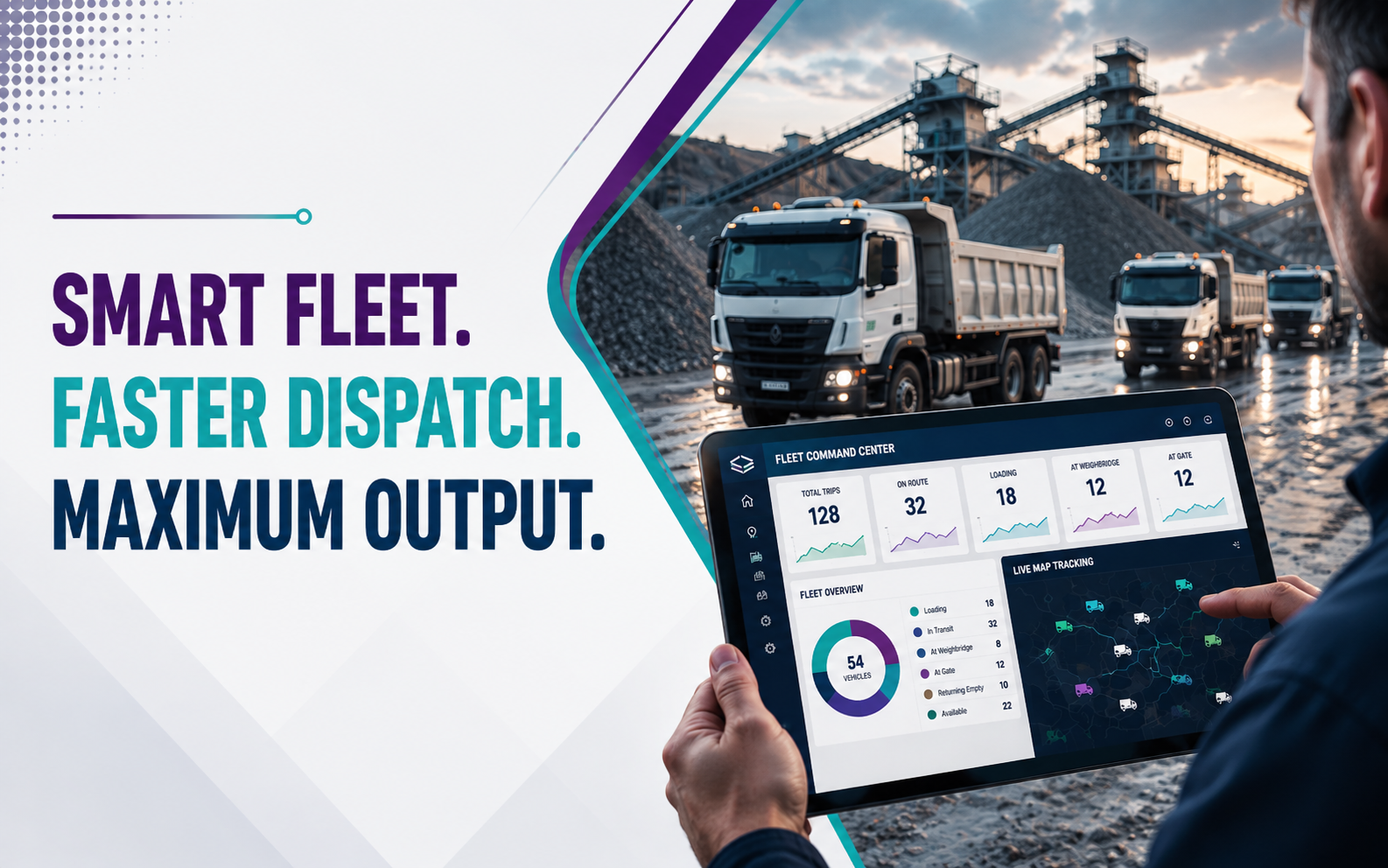
So this is not an article about accounting software being bad. It asks a narrower question: what happens when a business whose day revolves around a weighbridge, a crusher and a dispatch yard tries to run entirely inside a tool that was never designed with any of that in mind? If the category itself is new to you, start with our guide to what quarry and crusher ERP software is.
What accounting software does well
Accounting tools record financial transactions accurately. They handle statutory returns in a way every accountant understands. They raise invoices, track payments and give the owner a clear financial picture at month-end.
For a trading company or a small manufacturer with a handful of transactions a day, that is enough. Most quarries rightly start here too.
The structural mismatch in a quarry
The problem is not that accounting software does its job badly. A quarry produces a kind of data that this category of software has no built-in concept of.
- A weighbridge reading is not a financial transaction. It is a physical measurement that is supposed to become one.
- A crushing run does not produce one product. It produces several graded outputs from a single input, in proportions that shift from batch to batch.
- A gatepass is not a ledger entry. It is a physical authorisation tied to one vehicle at one moment.
None of this fits naturally into a system designed around invoices, ledgers and a chart of accounts. It can be forced to fit with workarounds, but the system was never built to hold it.
What each system is built to hold
|
What happens on site |
Generic accounting software |
Quarry ERP |
|
A truck is weighed in and out |
Typed in later from the paper slip |
Captured from the weighbridge as it happens |
|
The crusher produces several grades |
One stock figure, adjusted by journal entry |
Output recorded by grade against the run |
|
A vehicle is cleared to leave |
No record at all |
Gatepass tied to the weighment and the order |
|
Material is dispatched |
Invoice raised when someone gets to it |
Invoice generated from the dispatch record |
|
Stock sits on the yard |
Book figure, corrected after a physical count |
Updated as production and dispatch are posted |
|
Royalty and GST reports fall due |
Compiled by hand from registers |
Drawn from the same dispatch records |
Where this shows up in daily work
The mismatch shows up in ordinary, repeated tasks.
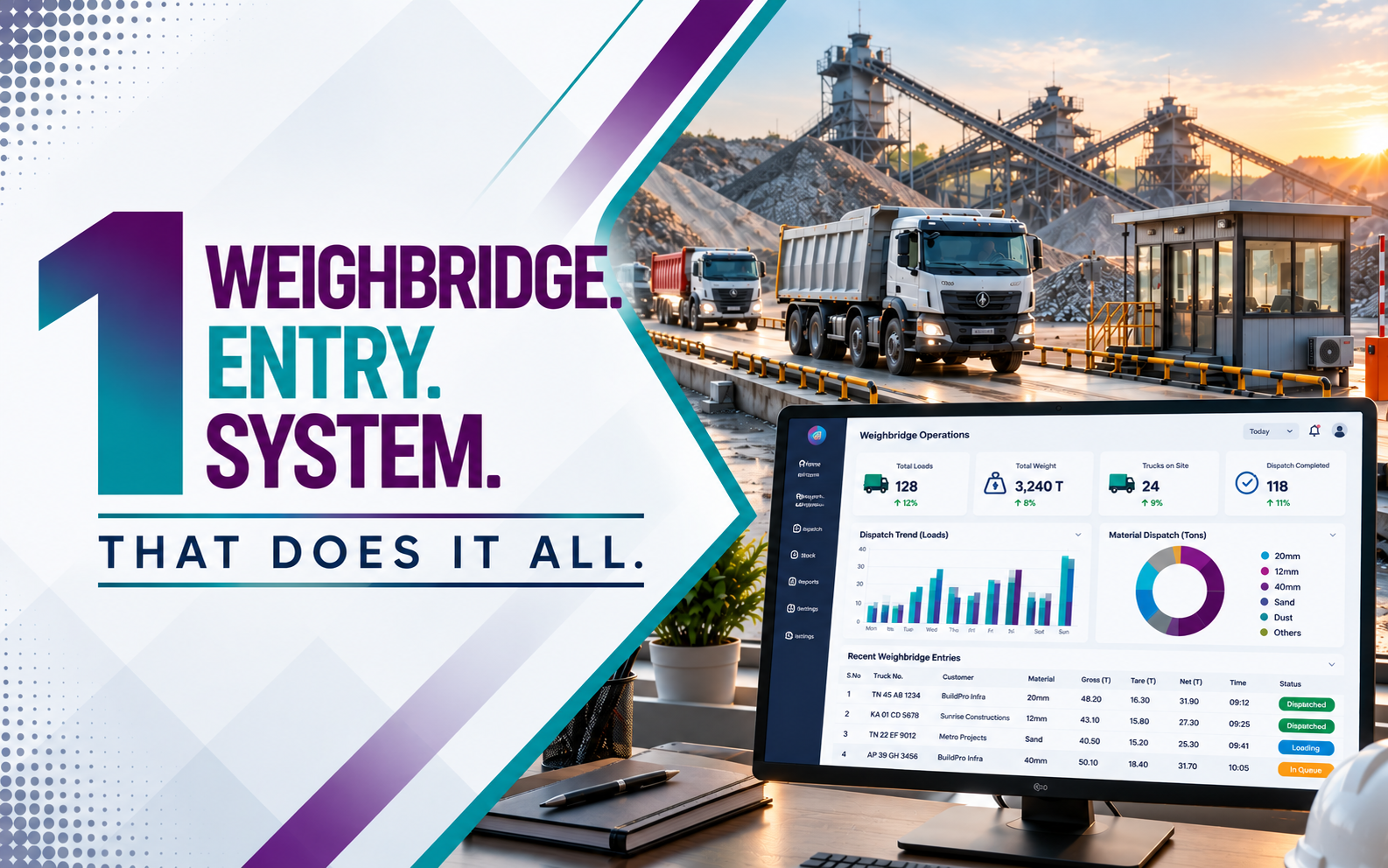
Re-entry at the weighbridge. Someone re-types slip data into the accounting system after the fact, because the two were never connected. We covered what that costs in disputes and lost time in our piece on weighbridge integration in ERP.
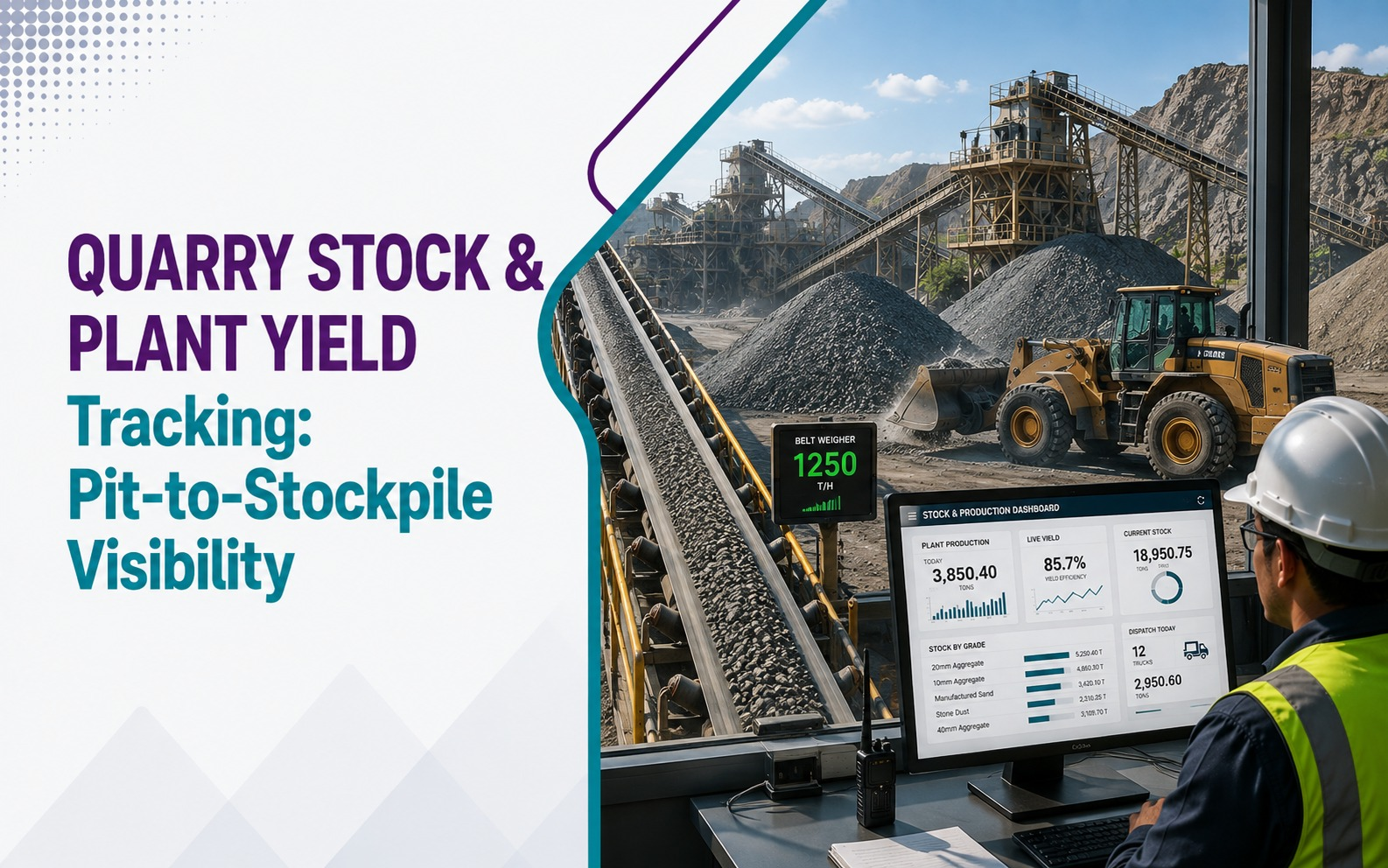
Two versions of stock. The books show one figure and the yard holds another, because production was never linked to the accounts. Nobody notices until a stock check surfaces the gap. Our post on quarry stock and plant yield tracking explains why an end-of-day count rarely closes it.
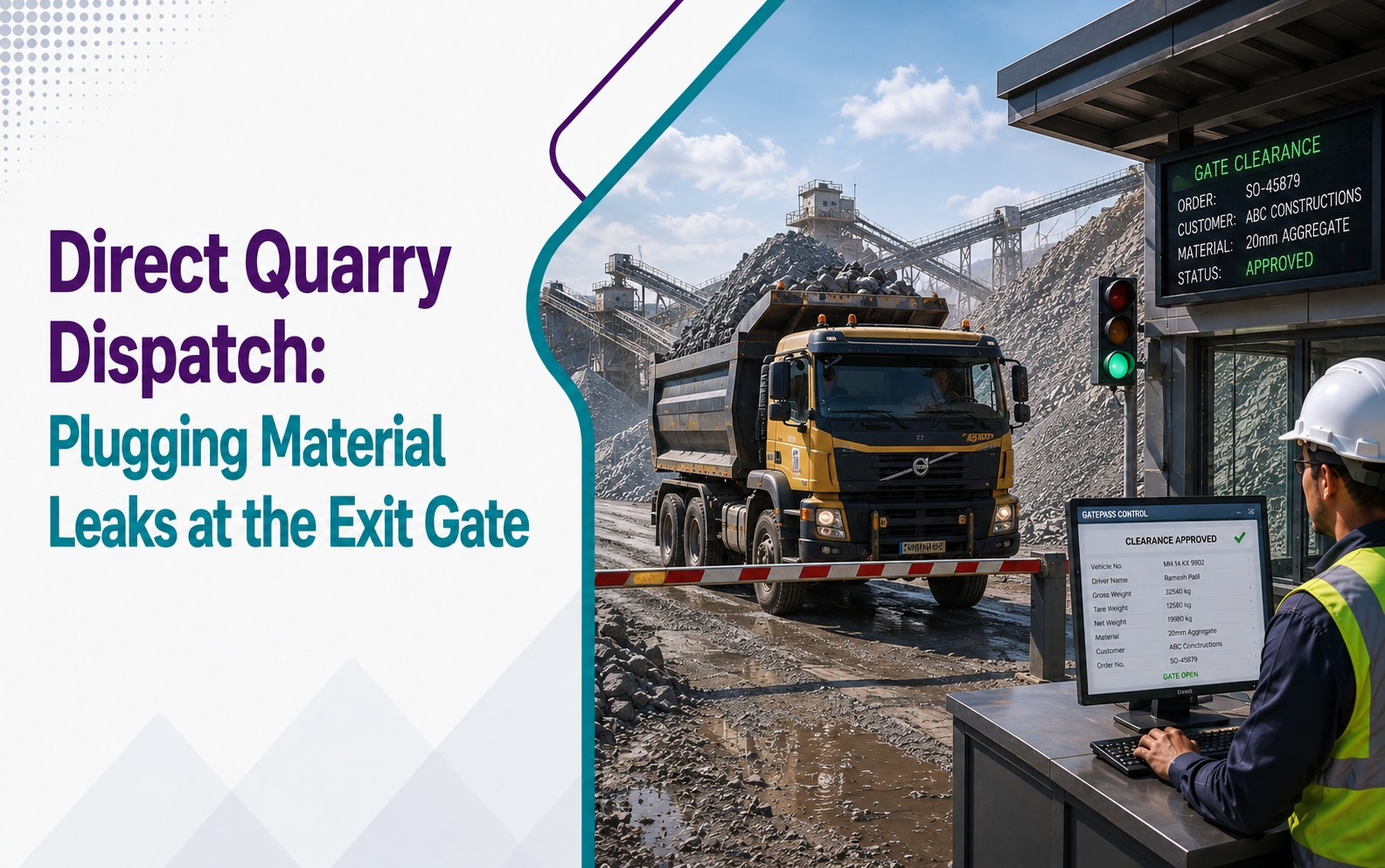
A gate with no record. Accounting software cannot say whether a loaded truck was authorised to leave. That check lives in a paper book, which is where material leaks at the exit gate begin.
Compliance built on retyped numbers. A quarry issues an invoice for almost every truck. When each one starts as a handwritten slip, every typing error travels into the return. Our guide to GST and e-invoicing for quarry and crusher businesses covers that risk in detail.
One load, two ways
Here is an illustrative example, not a client case. Take a single load of 20 mm aggregate.
On accounting software alone, the operator writes a slip at the weighbridge. Gate staff note the vehicle in a register. The slip reaches the office that evening or the next morning. Someone types the weight into an invoice and adjusts stock later. The same figure has been handled four times, by three people, across two days.
On a quarry ERP, the weighbridge posts the net weight against the sales order. The gatepass is issued from that weighment. Stock for that grade drops, and the invoice is ready before the truck reaches the road. The figure is entered once, by the scale.
When a quarry has not outgrown it yet
Not every quarry needs a dedicated system from day one.
A small operation with low dispatch volume and a handful of regular customers can run well on accounting software for quite a while, with a manageable amount of cross-checking. The mismatch becomes a real cost as volume grows, as more grades are tracked, and as more people need the same numbers at the same time.
If that point has not arrived, keep what works. If you are unsure, our checklist of five signs a quarry has outgrown spreadsheets and manual registers is a quick test.
What gets lost when you force the fit
For a business past that point, the cost is not one big failure. It is a steady build-up of small ones: double entry becomes routine, visibility lags behind reality, and reconciliation turns into a standing monthly job.
None of this is a flaw in the accounting software. It is the predictable result of asking a tool to do a job it was not designed for.
Two different starting questions
This is the real dividing line. Accounting software is built around the question, "What financial transaction happened?" A quarry ERP is built around a different one: "What physically happened on site, and how does it become a financial transaction automatically?"
That is a different starting point, not a more advanced version of the same thing. Accounting sits inside the system as an extension of the operational core.
Five questions to ask before you decide
- How many times is one weighbridge reading typed before it reaches an invoice?
- Can you see stock by grade right now, without phoning the yard?
- Does every vehicle that leaves have a record linked to a weighment?
- How long does month-end reconciliation take compared with two years ago?
- Could you produce royalty and GST figures today from one source?