What Is Quarry & Crusher ERP Software? A Complete Guide for Plant Owners
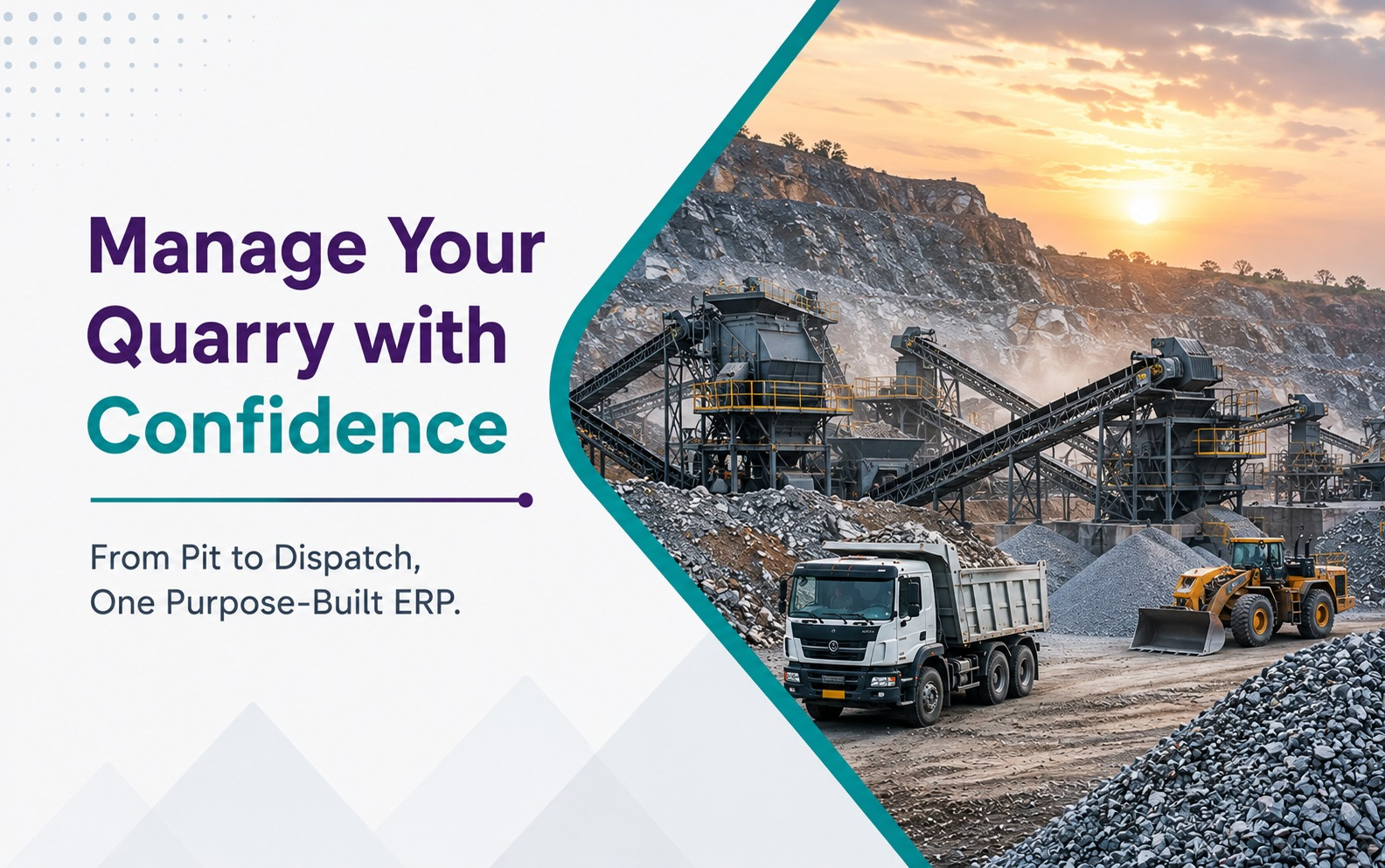
If you run a quarry or crusher plant, your operation doesn't behave like a typical trading business or discrete factory. You're managing extraction sites, crushing and screening circuits, stockyards, a weighbridge that never really stops, a gate that has to control every vehicle movement, and a fleet that needs to turn around fast enough to keep dispatch flowing. Somewhere underneath all of that, someone still has to keep the books straight and stay compliant with mineral royalty and tax rules.
This is the exact operational reality that Quarry & Crusher ERP software exists to address. But the term gets used loosely, and plant owners researching it for the first time often can't tell a genuinely industry-built system from a generic ERP with a quarry label stuck on top. This guide breaks down what the category actually covers, why standard software structurally falls short here, and what to look for before you commit to anything.
Why Quarry & Crusher Operations Don't Fit a Standard ERP Model
Most enterprise software - accounting platforms included - assumes a fairly linear model: raw materials go in, a single finished item comes out, one sale gets recorded. Quarry and crushing operations break that assumption at the root.
A single extraction cycle doesn't yield one product. It produces raw rock that splits, through crushing and screening, into multiple simultaneous outputs - different aggregate grades, manufactured sand, crusher dust - in proportions that shift depending on feed quality and machine performance. Generic software built around a single-product bill-of-materials logic simply isn't designed to track this kind of multi-output production, which is one of the clearest reasons a standard ERP struggles in this industry.
Layer on top of that the physical control points unique to this business: a weighbridge recording weight on every vehicle movement, a gatepass process controlling what material physically leaves the site, and a dispatch yard cycling trucks continuously through peak hours. The back office and the yard need to be in constant, real-time sync - not reconciled once a day after the fact.
What Quarry & Crusher ERP Software Is NOT
Before going further, it's worth being clear about what this category of software is not. Quarry & Crusher ERP is not just accounting software with an inventory module attached. It is not a standalone weighbridge application that prints tickets and stops there. It is not fleet-tracking software bolted onto a spreadsheet, and it is not a dispatch tool operating in isolation from your books. Each of these exists on its own in the market, and many quarry operators already use some version of one or two of them separately.
What makes this category distinct is that it combines all of these functions - weighing, gatepass, dispatch, production tracking, fleet management, inventory, and finance - into one connected, industry-specific operational platform, rather than leaving them as disconnected tools that each hold a piece of the picture.
Where Generic Accounting Software and Spreadsheets Break Down
This isn't a failing of Tally, Excel, or standard accounting packages - they simply weren't designed to interface with a weighbridge, enforce a gate based on a live credit check, or track multi-grade material output.
In practice, that gap shows up as specific, everyday problems. Manual weighbridge slips are prone to illegible entries, duplicate tickets, and delayed data entry, and reconciling them later against dispatch and billing records eats up hours that should not be necessary. Automated weighbridge integration significantly reduces vehicle turnaround time and manual data entry compared to paper-based scale processes, which in turn reduces the congestion and disputes that come from delayed or inaccurate weighment records. Separately, unbilled dispatches and unrecorded load discrepancies are a recognized source of material shrinkage in this industry, and sites relying entirely on manual weighment have historically had little defense against it. Back-office rekeying of paper tickets is also a common source of reconciliation errors and delayed invoicing, since customers can't be billed until someone manually transcribes a slip that may already be hours old.
What Quarry & Crusher ERP Software Is Actually Built to Handle
Put simply, Quarry & Crusher ERP software is a single platform that connects extraction, production, weighbridge, dispatch, compliance, finance, and reporting into one operational system - rather than leaving each of these as a separate tool that someone has to manually stitch together. A genuine system in this category covers:
- Extraction and site-level tracking - raw material movement from the pit onward, stock monitoring at the site level
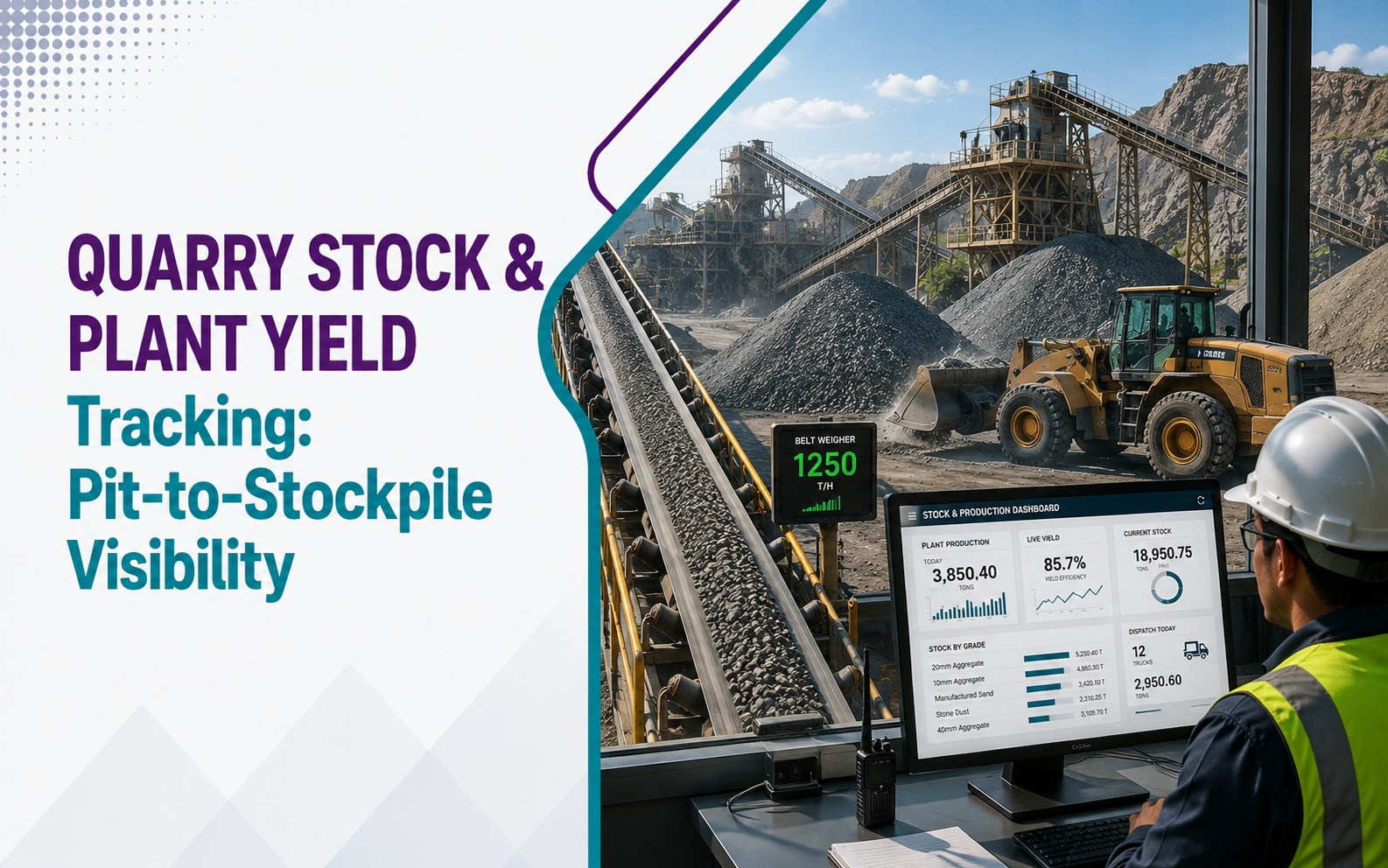
- Crusher and plant production tracking - input/output analysis and performance monitoring across crushing and screening stages
- Weighbridge integration - capturing vehicle entry, exit, and load data accurately, tied directly to sales orders
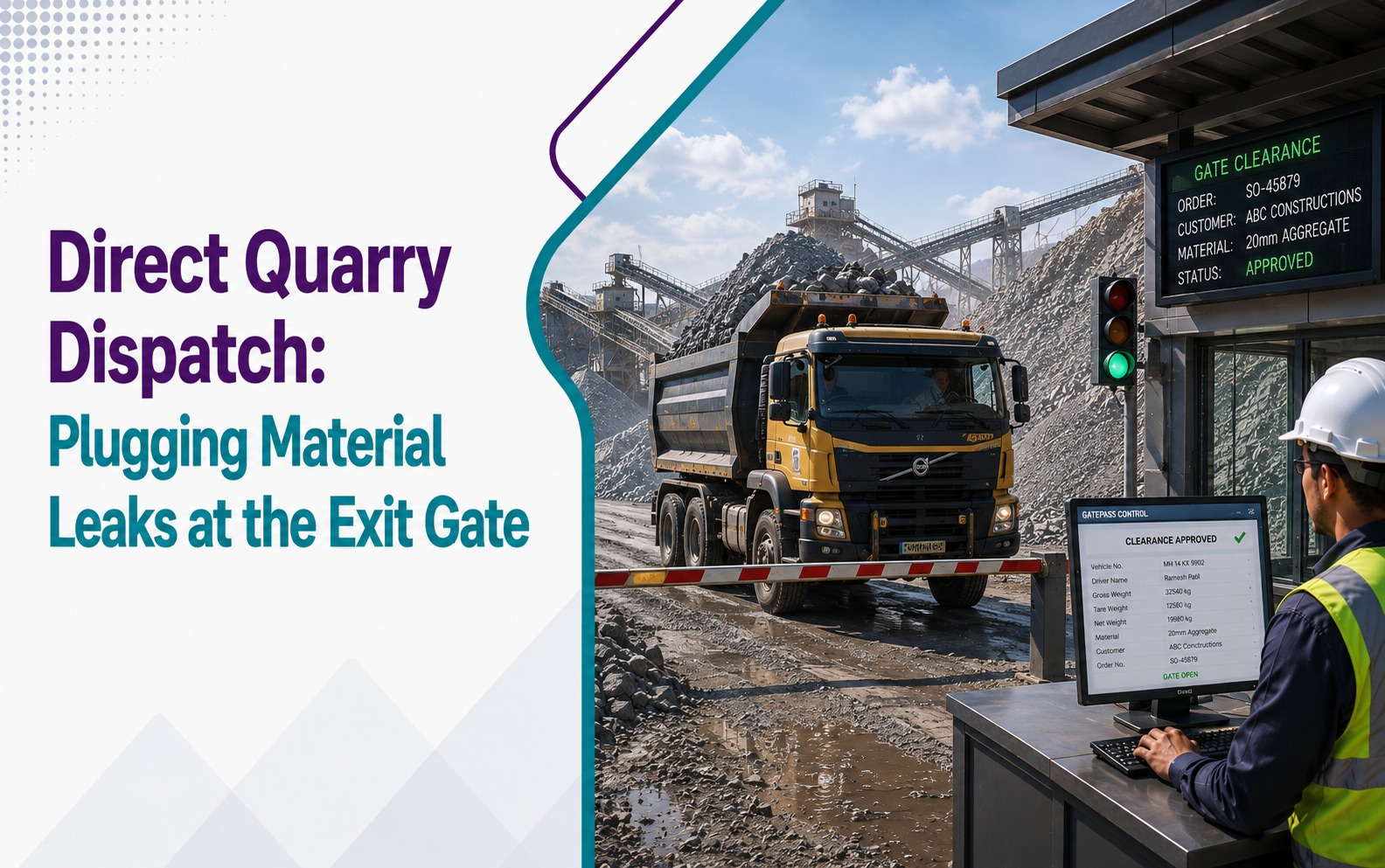
- Gatepass and dispatch management - controlling and recording what material leaves the site, and when
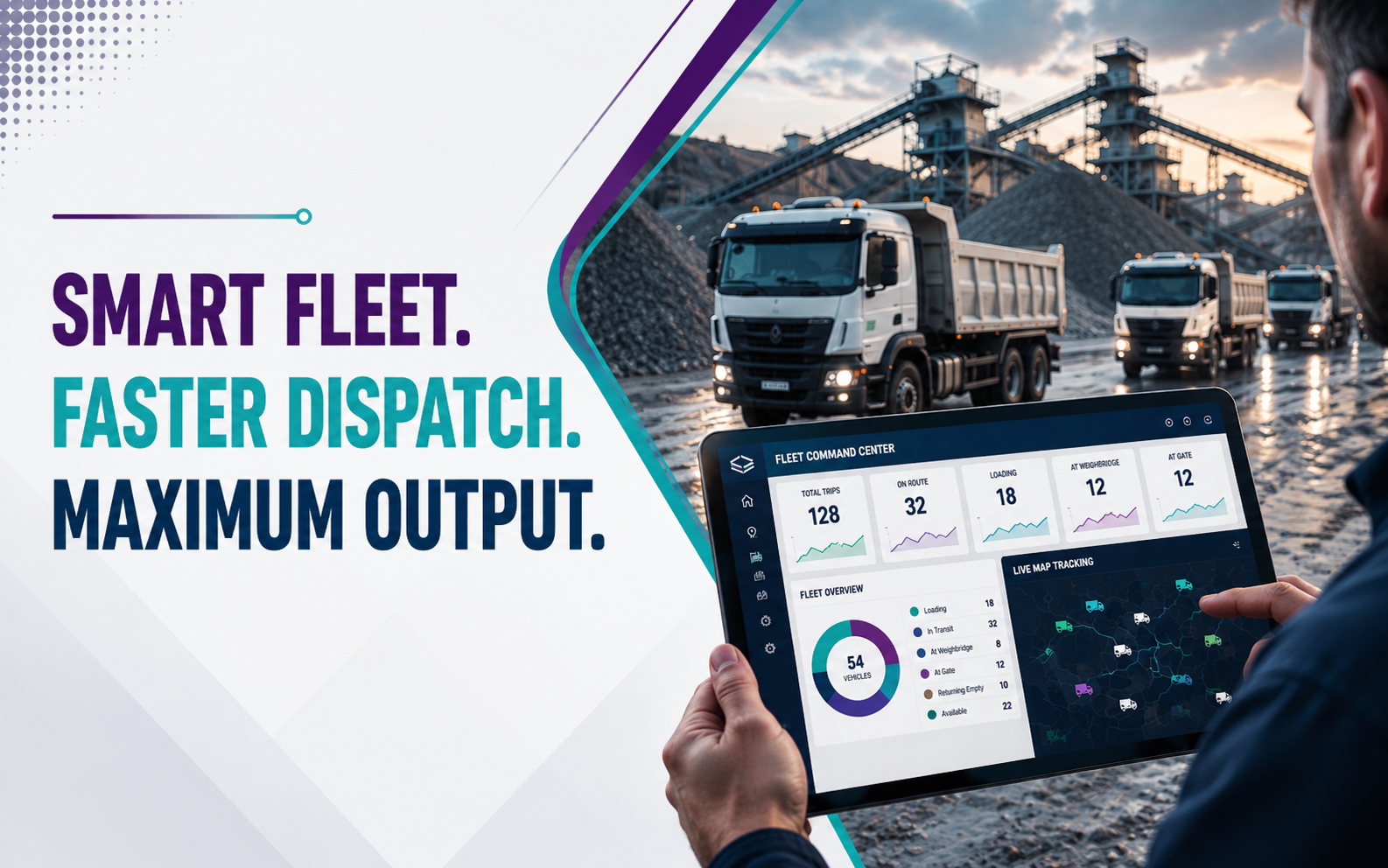
- Fleet and vehicle tracking - trip management, fuel monitoring, and turnaround efficiency
- Maintenance management - scheduled servicing and breakdown tracking for crushers, screens, and vehicles
- Purchase and inventory - raw materials, spares, and multi-grade finished stock
- Accounts and statutory reporting - GST-compliant billing, invoicing, and tracking of royalty or levy obligations tied to tonnage extracted or dispatched
- Real-time dashboards across production, sales, stock, and operational performance
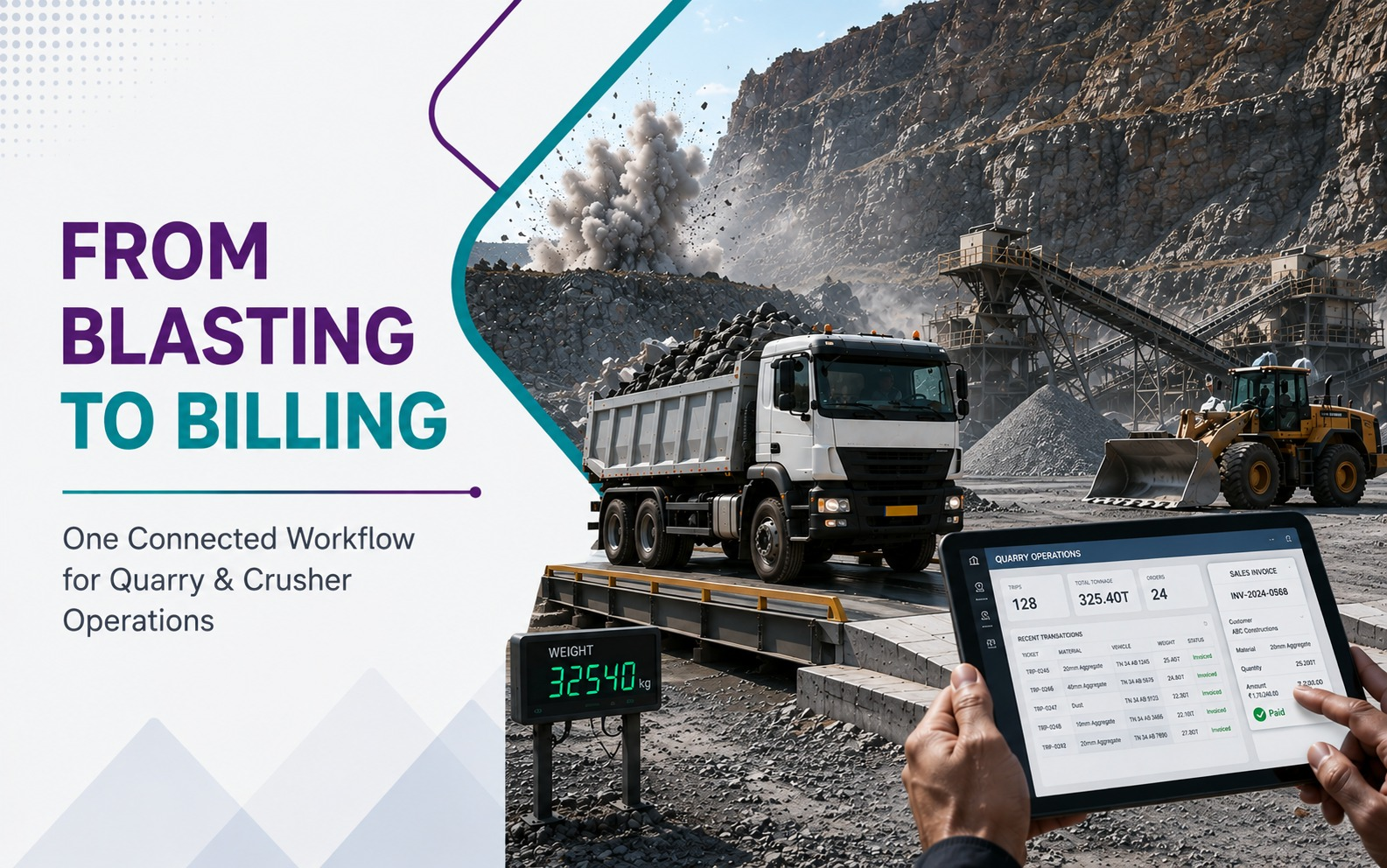
The value isn't any one of these modules in isolation - most quarry owners already use some version of billing software or a standalone scale system. The value is that a truck being weighed in, loaded, weighed out, and gate-passed becomes, automatically, a single dispatch record, a stock deduction, and a billable GST invoice - without three separate people re-entering the same number three different ways.
Reporting: Where the Data Actually Becomes Useful
A quarry ERP is only as useful as the reports it can generate from the data it captures, and this is where industry-specific systems tend to separate themselves from generic ones. Reports worth expecting from a genuine quarry ERP include:
- Production vs. dispatch reconciliation - comparing what was produced against what actually left the site, surfacing gaps that would otherwise go unnoticed
- Machine utilization reports - tracking running hours, downtime, and output against each crusher or piece of plant equipment
- Stock reconciliation reports - matching book stock against physical stock across multiple material grades
- Royalty and GST reporting - consolidating tonnage-based statutory liabilities and tax filings in a format ready for submission, rather than rebuilt from scratch each period
Without this kind of structured, industry-specific reporting, a plant owner is left doing in spreadsheets what the ERP should be generating automatically - which defeats much of the purpose of adopting one in the first place.
Generic ERP vs. Industry-Specific ERP: Two Different Categories
It's worth being precise here: generic ERP and industry-specific quarry ERP are not "basic" and "advanced" tiers of the same product - they solve different problems by design.
A generic ERP is built to be broadly applicable across trading, services, or standard manufacturing businesses. It can usually be configured for basic invoicing and inventory. What it typically cannot do without heavy customization is interface natively with a weighbridge, track multi-grade material output, or automate royalty calculation against tonnage data - because none of those are generic business problems.
An industry-specific quarry & crusher ERP is architected the other way around: the weighbridge, the gate, the crusher circuit, and statutory reporting are the starting point, with standard accounting and inventory functions built in as a natural extension of that operational core.
Integrations That Signal a Real Quarry ERP
The integrations a system supports - or doesn't - are a strong signal of how seriously it takes this industry. Weighbridge connectivity, GPS/fleet tracking, biometric attendance, CCTV monitoring, mobile access for site staff, and API-based integration for e-invoicing and other third-party systems are standard expectations here, not premium add-ons. A platform that treats these as expensive bolt-ons is usually a generic product wearing a quarry label.
Who Should Be Reading This
This is most relevant if you own or manage a quarry, crusher plant, or construction materials business that has outgrown a notebook, spreadsheet, or basic accounting package - whether that's a single pit or a multi-site operation. It applies equally to an owner making the call directly, an operations head evaluating vendors, or a finance manager trying to understand why reconciliation and statutory reporting keep taking so long. If your business runs a weighbridge, handles gatepass dispatch, and carries royalty or GST reporting obligations, this category was built for you.
How to Tell If a System Is Genuinely Built for This Industry
Before taking a vendor's word for it, a few questions separate a real quarry ERP from a relabeled generic one. Does it capture weighbridge readings directly, or does someone still key in the number by hand? Does it track multi-grade production output, or force everything into a single-product structure? Can it consolidate royalty or GST liability from tonnage data automatically, or is that still a manual spreadsheet exercise at month-end? Does it generate a compliant invoice from the same transaction that closes the gate, or are those disconnected steps? The answers reveal more about real-world fit than any feature brochure.
Where GrowBiz ERP Fits In
This is precisely the gap GrowBiz ERP's Quarry & Crusher solution is built to close - weighbridge data, gatepass and dispatch records, production tracking, fleet monitoring, statutory reporting, and GST-compliant billing, all inside one connected platform designed around how quarry and crusher operations actually run.
To see the full breakdown of features and integrations, visit Quarry & Crusher ERP - or explore Codelayer to see how this fits into the wider GrowBiz ERP ecosystem covering RMC, brick manufacturing, and 14 other industries under one platform.