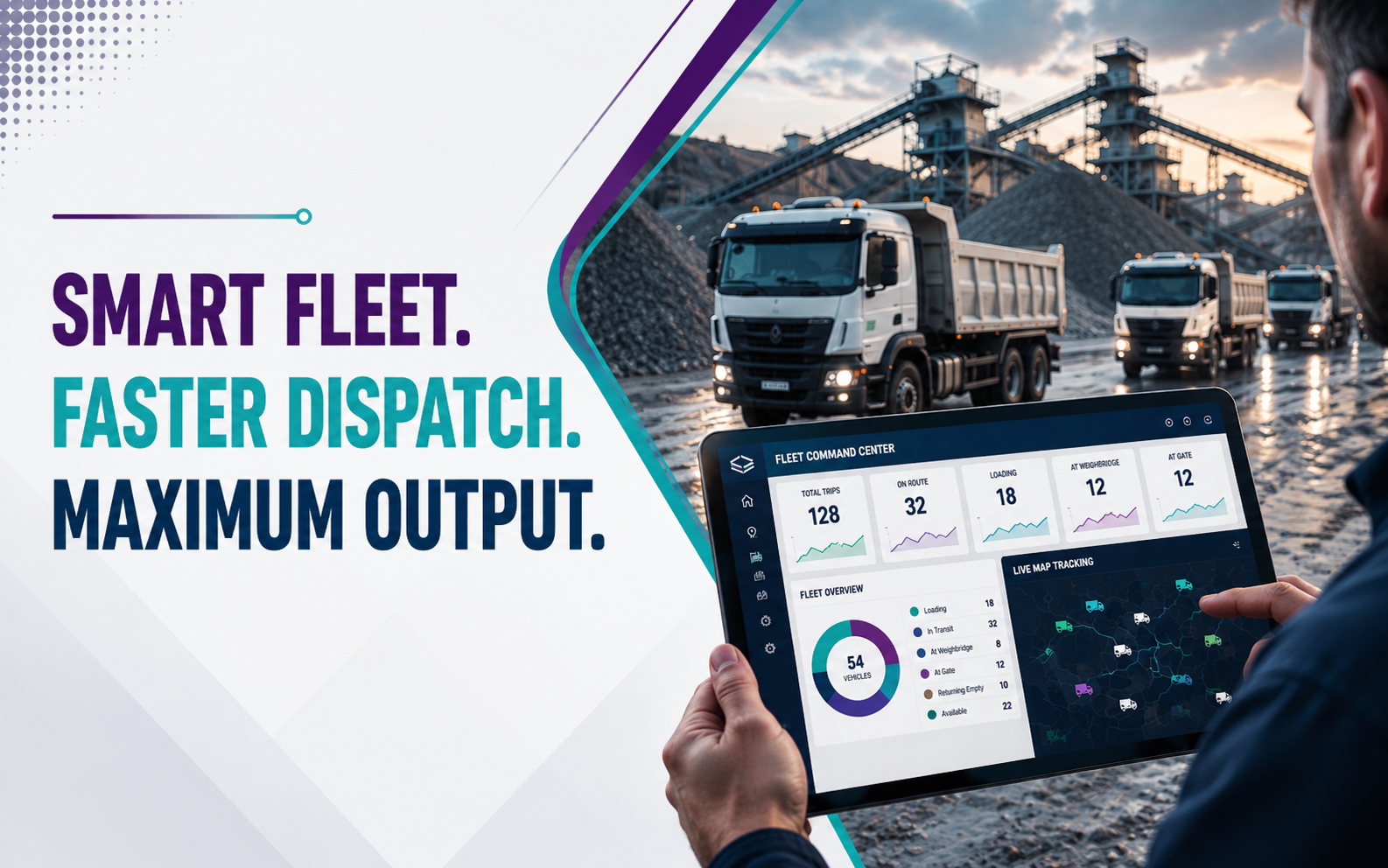
Head out to a processing yard late in the shift and you will spot a familiar scene. A supervisor walks past a stockpile, gauges its volume with a quick glance, and jots down an estimated tonnage in a field notebook. It is not sloppy work. It is simply the only practical method available when a site lacks automated tools to confirm what sits on the ground. That rough guess turns into the evening inventory total, drives the next morning's dispatch commitments, and quietly compounds errors day after day
.
Clarifying the Difference: Plant Production versus Yard Stock
People often treat these two metrics as identical, but they measure distinct operational realities:
- Production Tracking: Captures what the plant generated over a given run, logging the volume of raw feed crushed and screened into specific product grades.
- Stock Tracking: Captures what currently sits in the yard right now, balancing cumulative output against verified dispatches.
Production shows what came off the belts. Stock shows what remains available for sale. A business can track crushing hours with high accuracy while remaining completely blind to actual yard stock. In many quarries, machine runtimes provide decent production records, while actual stockpile numbers are reconstructed retroactively through visual yard checks.
Practical Input-Output Analysis Across the Plant
Input-output tracking is a direct comparison between the raw blasted rock fed into the primary crusher and the final graded aggregate collected at the discharge conveyors.
While it sounds like an accounting exercise, plant managers rely on it for operational maintenance. When a fixed tonnage of feed rock yields far less usable product than usual, equipment performance has slipped. A screen deck could be blinding over, a crusher setting might have shifted, or the raw rock composition changed. Without continuous yield benchmarks, these processing issues persist unnoticed for weeks. Tracking ratios is about catching mechanical wear before it ruins daily efficiency.
The Operational Disconnect Between Yard and Office
Quarry businesses constantly battle a communication gap between the weighbridge office and the processing floor:
- Office Records: Rely on the previous manual inventory count, reduced by whatever delivery tickets were logged in the dispatch software.
- Yard Realities: Continuously produce new tonnage and load out haul trucks throughout the day without immediate office reconciliation.
Neither record is fabricated. They simply represent the facility at different points in time. During slow winter periods, this variance causes minor headaches. During peak construction cycles, it leads sales reps to book large orders for aggregate grades that the yard ran out of hours earlier
.
Why Single Evening Stock Checks Fall Short
Taking a single inventory measurement at sunset only captures a moving target. Bulk aggregate moves constantly across conveyor belts and into haul trucks, meaning an evening walk-through describes an inventory balance that shifted multiple times since daybreak.
Visual estimation also faces physical limitations. Loose bulk materials do not sit in uniform geometric shapes. When various grades like coarse aggregate, manufactured sand, and crusher dust sit in adjacent bays, visual lines blur. Even an experienced yard foreman produces an approximation rather than a hard weight measurement. Over a month of production, these daily visual variances compound into massive inventory balance errors.
The Purpose of Live Production Dashboards
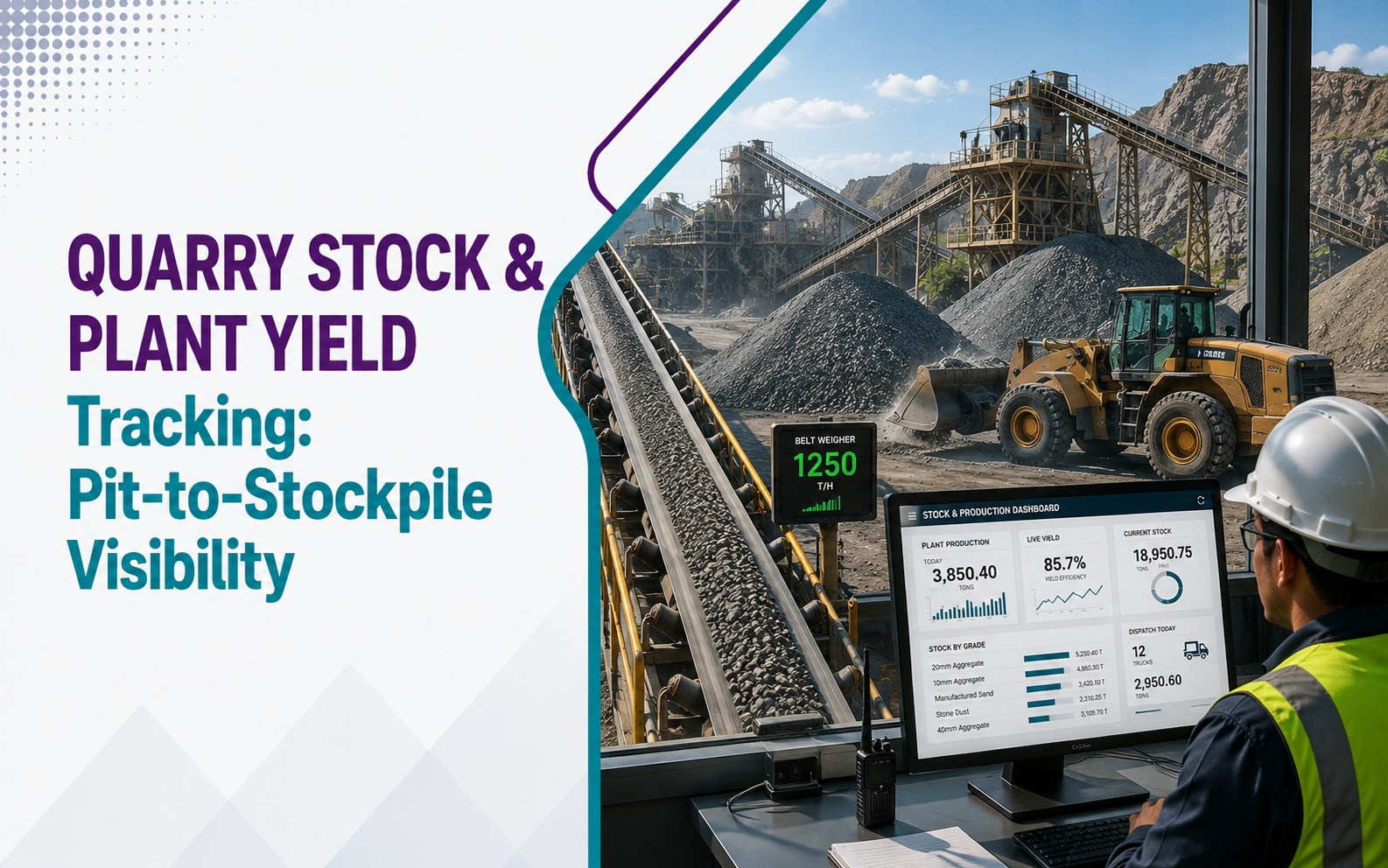
A functional production interface presents crushing volumes and grade outputs as material clears the conveyors. It maps tonnages directly to specific operational runs rather than relying on delayed paper tallies collected during shift wrap-ups.
Live visibility does not require monitoring every single machine sensor at once. It focuses on removing the communication lag between aggregate crushing and commercial dispatching. In paper-heavy operations, that information delay often stretches across an entire working shift.
Connecting Production Feeds Directly to Live Inventory
The workflow improvement is straightforward: as aggregate clears final screening, the system logs output directly into active inventory records.
|
Metric Type |
Data Source |
Frequency |
Purpose |
|
Live Yield |
Belt weighers and plant logs |
Continuous |
Identifies crushing efficiency and equipment issues. |
|
Dynamic Stock |
Automated production minus gate dispatches |
Real-time |
Prevents over-committing unavailable aggregate to buyers. |
|
Physical Audits |
Periodic survey checks |
Monthly |
Validates and aligns digital records with physical piles. |
Direct data integration eliminates the struggle to reconstruct inventory balances from scratch at the end of the week. Routine yard checks change from being the sole source of stock figures into an easy verification tool that validates digital records.
Managing Multiple Product Grades Stored in Close Proximity
Quarries manage complex product mixes rather than single inventory items. A standard crushing pass simultaneously yields manufactured sand, multiple aggregate sizes, and fine mineral dust.
Because stockpiles sit tightly grouped together, yard personnel can easily misattribute volumes between adjacent grades. Tracking aggregate inventory requires recording each product grade on its own distinct ledger rather than grouping the entire yard into one general bulk tonnage number.
The Business Impact of Inaccurate Yard Figures
When inventory records drift, routine commercial operations suffer:
- Dispatch teams accept purchase orders for aggregate sizes that the loaders cannot fulfill when haul trucks arrive.
- Financial statements report inaccurate asset values, creating complicated reconciliations during year-end tax audits.
- Plant bottlenecks like torn screen meshes or worn crusher jaws run unnoticed due to missing yield trends.
Evaluating Real-Time Platform Capabilities
Quarry operators evaluating software should ask direct questions about system architecture:
- Does the management dashboard update as aggregate is processed, or does it batch sync on a scheduled delay?
- Does the inventory ledger track discrete aggregate sizes, or does it compress stock into a single bulk number?
- Does the platform require consistent data entry at key handoffs, or does it assume software alone fixes bad records?
Technology does not eliminate operational discipline. Software requires accurate data entry at the weighbridge and processing plant to keep yard balances dependable.
Where GrowBiz ERP Fits In
GrowBiz ERP Quarry and Crusher software closes the visibility gap between processing lines and commercial dispatch. Production output feeds directly into dynamic inventory accounts by aggregate grade, keeping the site office and crushing floor aligned on identical numbers.
Review the Quarry and Crusher ERP module to evaluate these operational workflows, or check out the wider GrowBiz ERP suite for ready-mix concrete, brick plants, and heavy manufacturing facilities.