Stand near a quarry loading bay for an hour and you'll usually see it: a truck sitting with its engine running, driver leaning against the door, waiting for someone to tell them where to go next. Nobody planned for that truck to sit idle. It's just what happens when vehicle movement isn't actually being managed. It's being reacted to, shift after shift, by whoever happens to be closest to the radio.
This is what fleet and dispatch management is meant to solve, and it's worth being clear about what that actually means, because it's easy to confuse with things we've already covered.
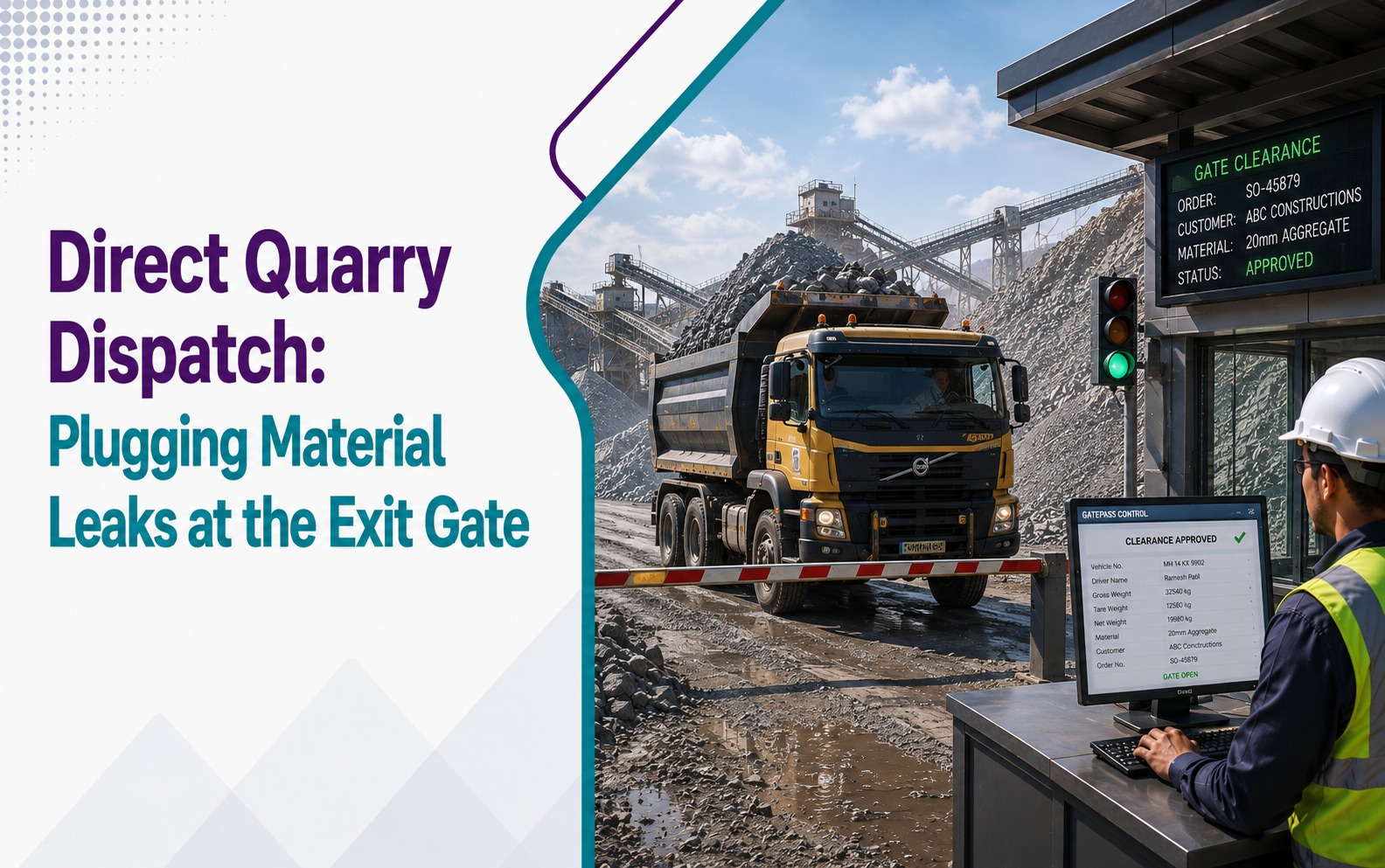
Weighbridge integration is about accurately measuring what a vehicle carries. Gatepass automation is about controlling what leaves the site. Fleet and dispatch management is a different layer entirely. It's about which vehicle goes where, in what order, and how quickly it completes that cycle before starting the next one.
A quarry can have a perfectly accurate weighbridge and a well-controlled gate and still lose significant daily capacity simply because trucks aren't being sequenced and directed efficiently between those checkpoints.
Why Turnaround Time Is the Number That Actually Matters
It's tempting to think about fleet efficiency in terms of how many trucks a business owns. The more useful number is how many completed loading-to-dispatch cycles each truck manages in a working day.
A truck that sits idle for stretches of time isn't failing mechanically. It's simply not being used, which is functionally the same as not having it at all for that period.
Fewer completed cycles per truck, across a whole fleet, over a full working day, adds up to fewer loads dispatched. This can happen without anyone necessarily noticing exactly where that time went, because it's spread out in small gaps rather than one obvious delay.
Why Trucks Actually Sit Idle
The honest answer is rarely dramatic. It's usually a loading sequence that isn't clearly communicated, so a driver arrives and waits to find out if they're next.
It can be a driver parked near the crusher with no instruction about which stockpile to head to once loading is done. It can also be two trucks converging on the same loading point because nobody coordinated the order in which they should arrive.
None of these are equipment failures or staff negligence. They're the predictable result of coordinating vehicle movement through word of mouth, a radio call, or someone remembering who's next, rather than through a system that actually tracks it.
Knowing Where Every Vehicle Is, Not Just Where It's Going
Fleet visibility gets talked about as if it only means knowing a vehicle's GPS location, but that's a fairly narrow slice of what actually matters day to day.
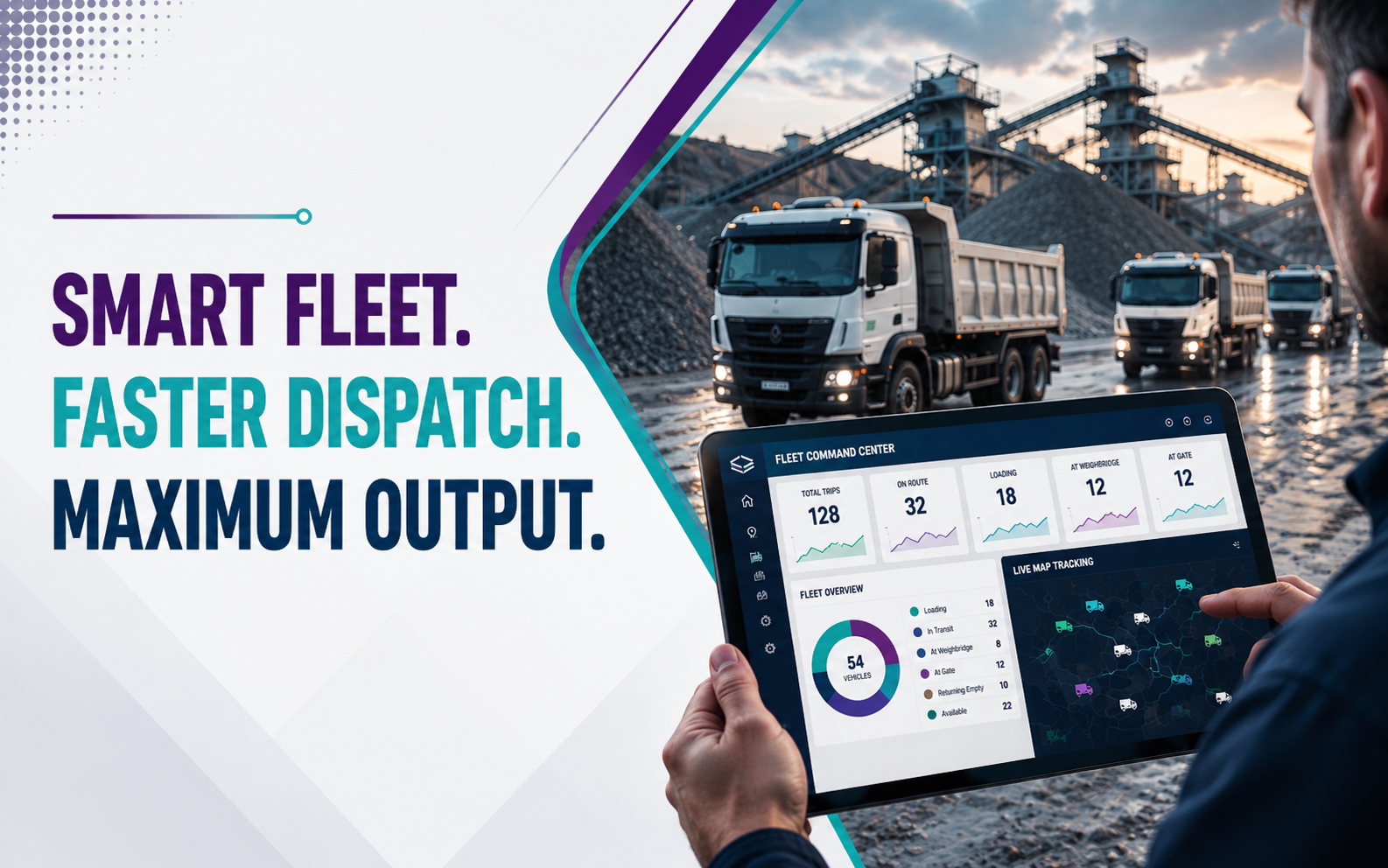
What a dispatch supervisor really needs to know is where a vehicle sits in its operational cycle.
For example:
- Is it currently loading?
- Is it in transit to the weighbridge?
- Is it queued at the gate?
- Has it already been dispatched and is returning empty?
- Is it available for the next assignment?
GPS location tells you a dot on a map. Cycle-stage visibility tells you whether that truck is available for the next assignment or still working through the current one.
Without that distinction, dispatch decisions end up being guesses dressed up as coordination.
Fuel Monitoring and Trip Logs Support This, But Don't Define It
Fuel consumption tracking and trip logging are genuinely useful, but they're supporting functions, not the core of fleet management.
Knowing how much fuel a vehicle burned on a trip, or having a record of completed trips for a shift, helps with cost control and accountability after the fact.
It doesn't, on its own, help a dispatcher decide which of three waiting trucks should be sent to load next.
Treating fuel and trip data as the main event tends to produce systems that are good at reporting on the past and unhelpful in the moment a decision actually needs to be made.
Dispatch Shouldn't Run Ahead of What's Actually in Stock
One of the more overlooked failure points in dispatch planning is sending a truck to be loaded with a grade of material that isn't actually available in the quantity expected.
This happens more often than it should when dispatch planning and stock records aren't connected. A truck gets assigned based on what the yard is assumed to have, not what it's confirmed to have right now.
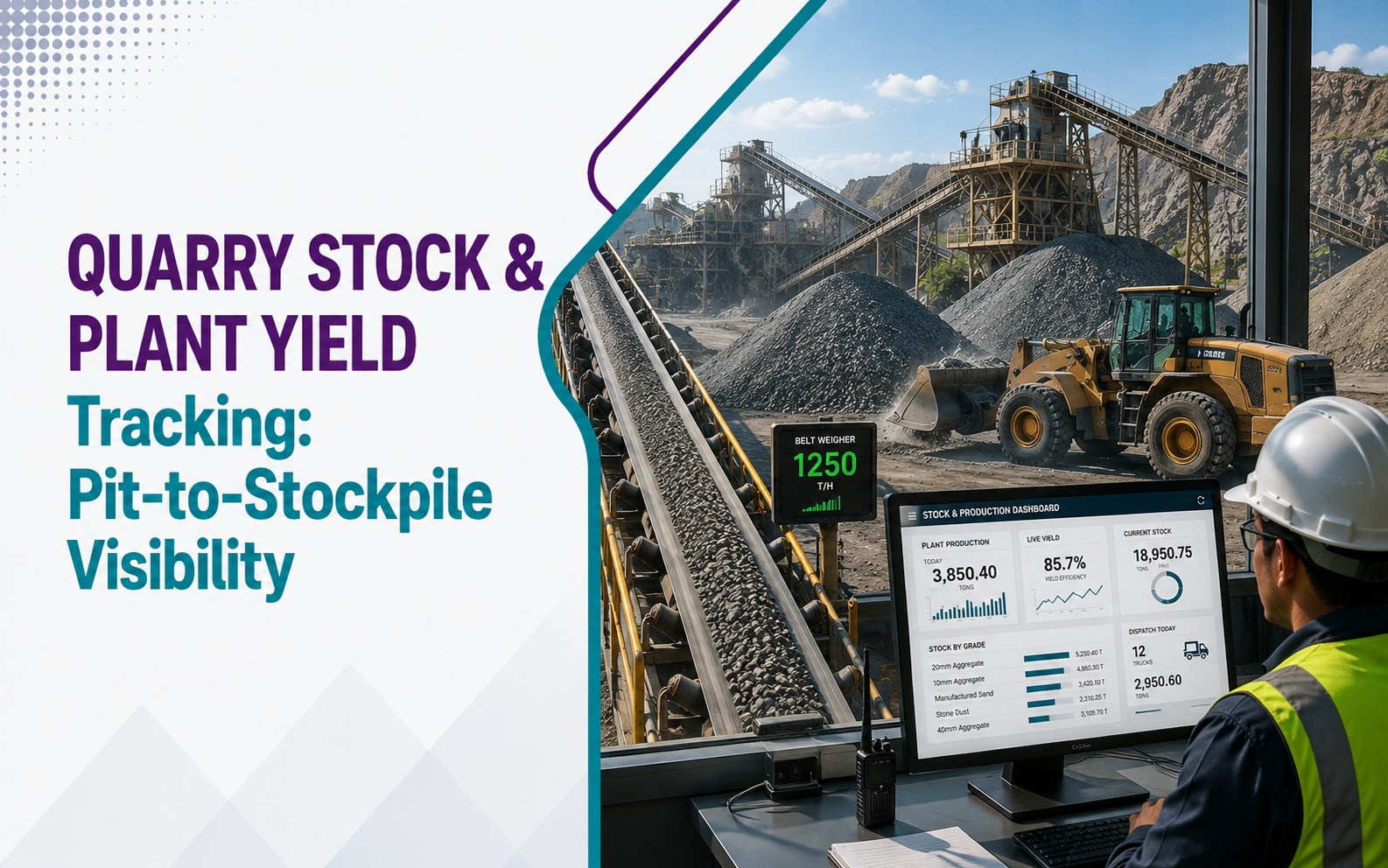
We've covered this gap in more depth in our piece on quarry stock and production tracking.
The short version here is that dispatch decisions are only as good as the stock data they're based on. A vehicle sent to load against outdated stock figures just becomes another truck waiting at the yard for a problem someone else has to sort out.
What Better Dispatch Actually Changes, and What It Doesn't
It's worth being straightforward here: organizing vehicle flow more effectively reduces unnecessary waiting, miscommunication, and duplicated trips to the same loading point.
It does not eliminate queuing altogether, particularly during genuinely high-demand periods when more trucks are moving through the site than the plant can physically process at once.
A well-run dispatch system manages that peak load more gracefully. Trucks queue with a clear sense of order and expected wait, rather than idling without any indication of when their turn will come.
But it doesn't manufacture capacity that the plant doesn't have. Anyone promising that automation removes queuing entirely during peak dispatch is overstating what coordination can actually do.
Connecting Dispatch to the Rest of the Yard
The real value of fleet and dispatch management shows up when it's tied into the same data as the rest of the operation, including:
- Verified stock by grade
- Gate clearance status
- Weighbridge scheduling
- Vehicle availability
- Current vehicle cycle stage
Rather than running as its own isolated radio-and-clipboard process, dispatch becomes part of a connected operational system.
When a dispatcher can see which trucks are free, what's actually available to load, and where each vehicle sits in its cycle, sequencing decisions stop being guesswork and start being coordination based on current, shared information.
Where GrowBiz ERP Fits In
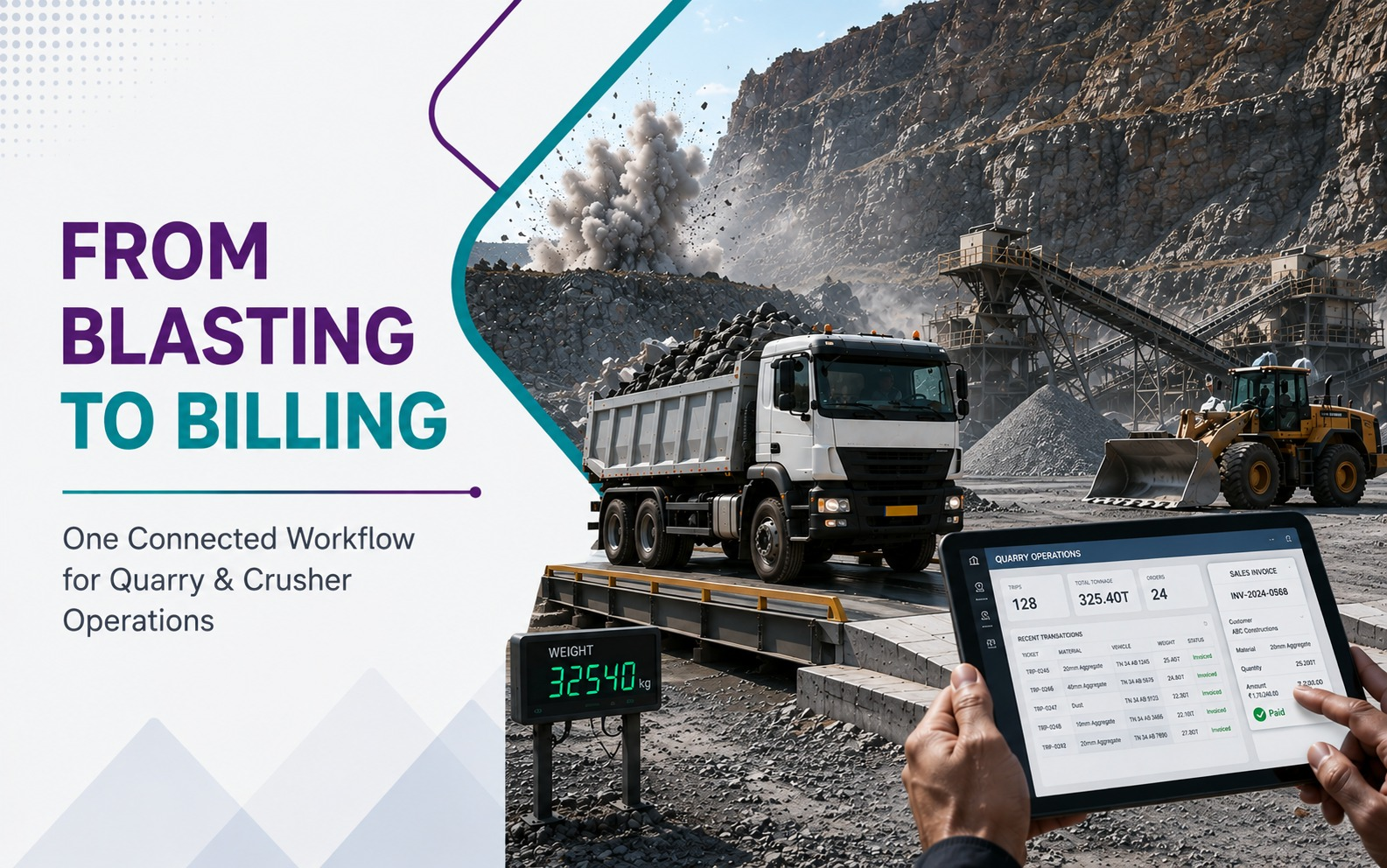
This is the layer GrowBiz ERP's Quarry & Crusher solution is built to support. It connects fleet and dispatch coordination directly with stock, gatepass, and weighbridge data, so vehicle movement is planned against what the yard actually has, not what someone assumes it has.
To see how this connects to the rest of the operation, visit Quarry & Crusher ERP, or explore the GrowBiz ERP ecosystem to see how it fits alongside RMC, brick manufacturing, and the other industries Codelayer works in.