
A quarry doesn't issue one invoice a month, or even one a day. It issues dozens, sometimes hundreds, each tied to a truck that came, weighed, loaded, and left. That volume is exactly what makes GST compliance different for a business like this than for a company that raises a handful of invoices a week. The compliance requirement itself isn't unusual; it's the frequency, at scale, several times an hour during a busy dispatch window, that turns a manageable task into a genuine operational pressure point.
Why Volume Changes Everything Here
GST compliance asks for accurate, correctly formatted, timely invoices. On paper, that's a reasonable ask. In a quarry that dispatches fifty or a hundred loads a day, it means fifty or a hundred separate moments where accuracy and timeliness both have to hold, one after another, without a break to catch up. A single missed or delayed invoice in a low-volume business is a minor inconvenience. The same miss, repeated across a high-frequency dispatch operation, becomes a pattern, and patterns are what eventually show up as real compliance gaps, not isolated mistakes.
As of 2026, GST e-invoicing is mandatory in India for B2B transactions once a business crosses an aggregate annual turnover threshold, currently set at ₹5 crore (in any financial year from 2017-18 onwards), and businesses with an aggregate turnover of ₹10 crore or more must report each invoice to the government's Invoice Registration Portal (IRP) within 30 days of issuance. In practical terms, that means the invoice can't just be created and handed over; it has to be authenticated with an Invoice Reference Number (IRN) and a QR code before it's considered valid, and if that authentication doesn't happen within the required window, the invoice effectively falls out of compliance even if the numbers on it are correct. These specific thresholds and timelines are set by the GST authorities and do change over time, so it's worth confirming current applicability with your accountant or tax advisor rather than treating any article, including this one, as the final word.
What E-Invoicing Actually Asks of a Dispatch-Heavy Business
Stripped of the legal detail, what e-invoicing asks for operationally is fairly specific: an invoice generated at, or very close to, the point of dispatch, built from the same net weight and transaction details that were confirmed at the weighbridge, correctly formatted, and submitted for authentication without a long delay. That's a reasonable list of requirements when there are five invoices to issue in a day. It becomes a genuinely difficult list to satisfy consistently by hand when there are fifty, especially when the person handling invoicing is also handling several other things at once.
Why the IRN Needs to Exist Before the Truck Leaves
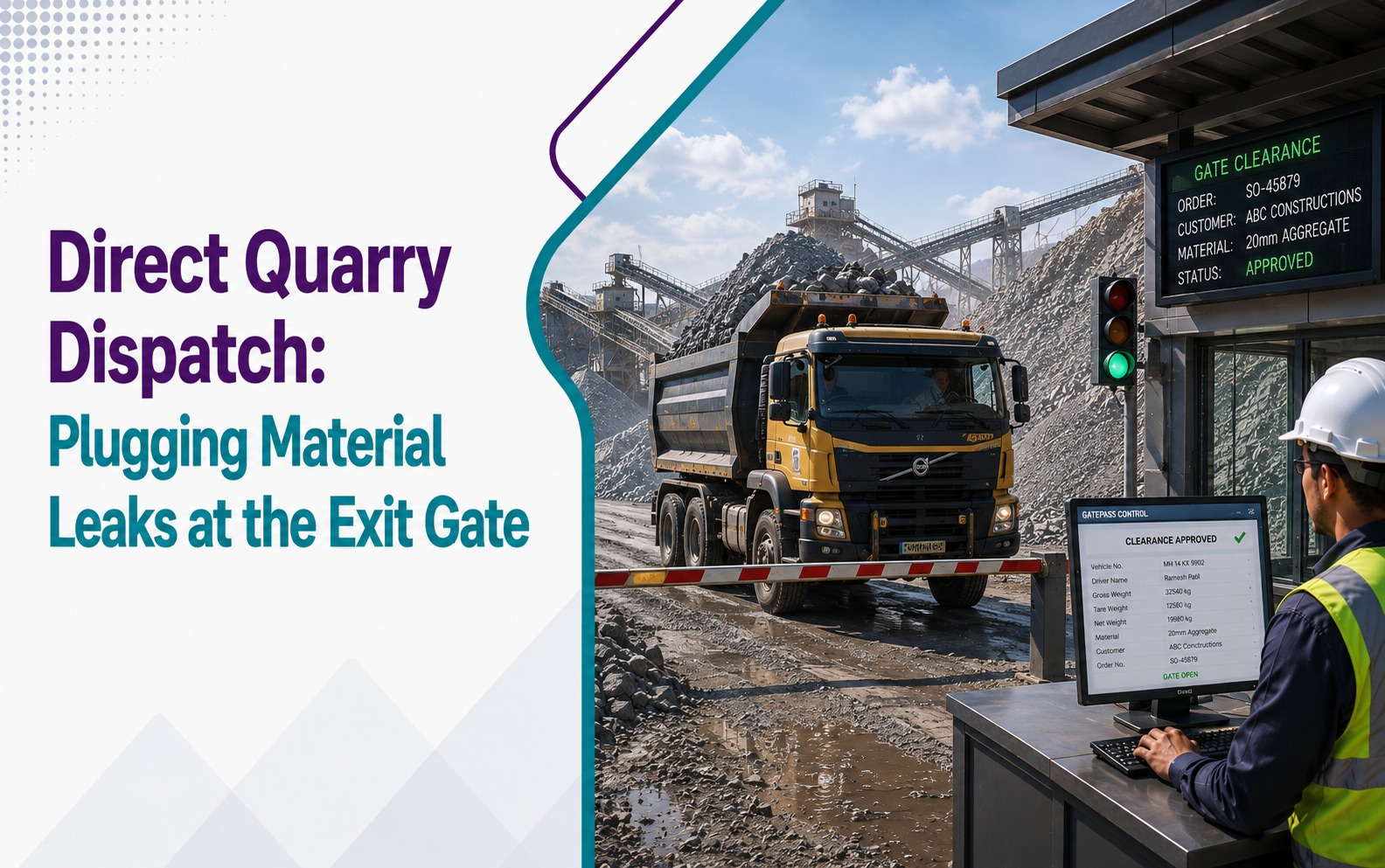
There's a specific reason the timing of e-invoice generation matters more in a quarry than in most other businesses: the E-Way Bill, which is the document required to legally move goods on the road above a certain value, is directly linked to the e-invoice. A truck carrying aggregate can't simply leave with a delivery challan and a promise that the invoice will be sorted out later. If the material moves before a valid, IRN-bearing invoice exists, the vehicle is effectively on the road without proper documentation, which exposes it directly to penalties at a roadside check. This is what turns e-invoicing from a back-office paperwork task into something that has to happen before the gate opens, not sometime after.
What Goes Wrong When Invoicing Is Disconnected from the Weighbridge
This is where the operational reality tends to diverge from the compliance requirement. If invoicing runs as a separate process from the weighbridge and dispatch record, someone collecting paper slips through the day and entering them into the billing system later, a few predictable things start happening. Invoices get generated in a batch at the end of the day or the next morning instead of close to the dispatch moment, which eats directly into any reporting window tied to the invoice date, and leaves vehicles moving on the road in the meantime without a properly linked E-Way Bill. The quantity on the invoice sometimes doesn't quite match what the delivery record shows, because the person doing the billing is working from a written slip rather than the original weighbridge figure. And GST calculations done manually, invoice after invoice, are exactly the kind of repetitive task where small errors creep in over the course of a long day, not because anyone is careless, but because nobody does the same arithmetic fifty times without an occasional slip.
Two Different Problems: Getting It Right and Getting It in on Time
It's worth separating these two things clearly, because they get solved differently. Billing accuracy is about whether the invoice reflects the correct quantity, rate, and tax calculation for that specific dispatch. Compliance timeliness is about whether that invoice is generated and authenticated within the window the law requires, regardless of whether the numbers on it are correct. A business can have perfectly accurate invoices that are consistently late, or perfectly timely invoices with quantity errors carried over from a mismatched slip. Solving one doesn't automatically solve the other, which is exactly why both need to be addressed by the same underlying process: invoicing generated directly from the same data as the dispatch, at the moment the dispatch happens, and before the vehicle is on the road.
Where This Connects Back to the Rest of the Operation
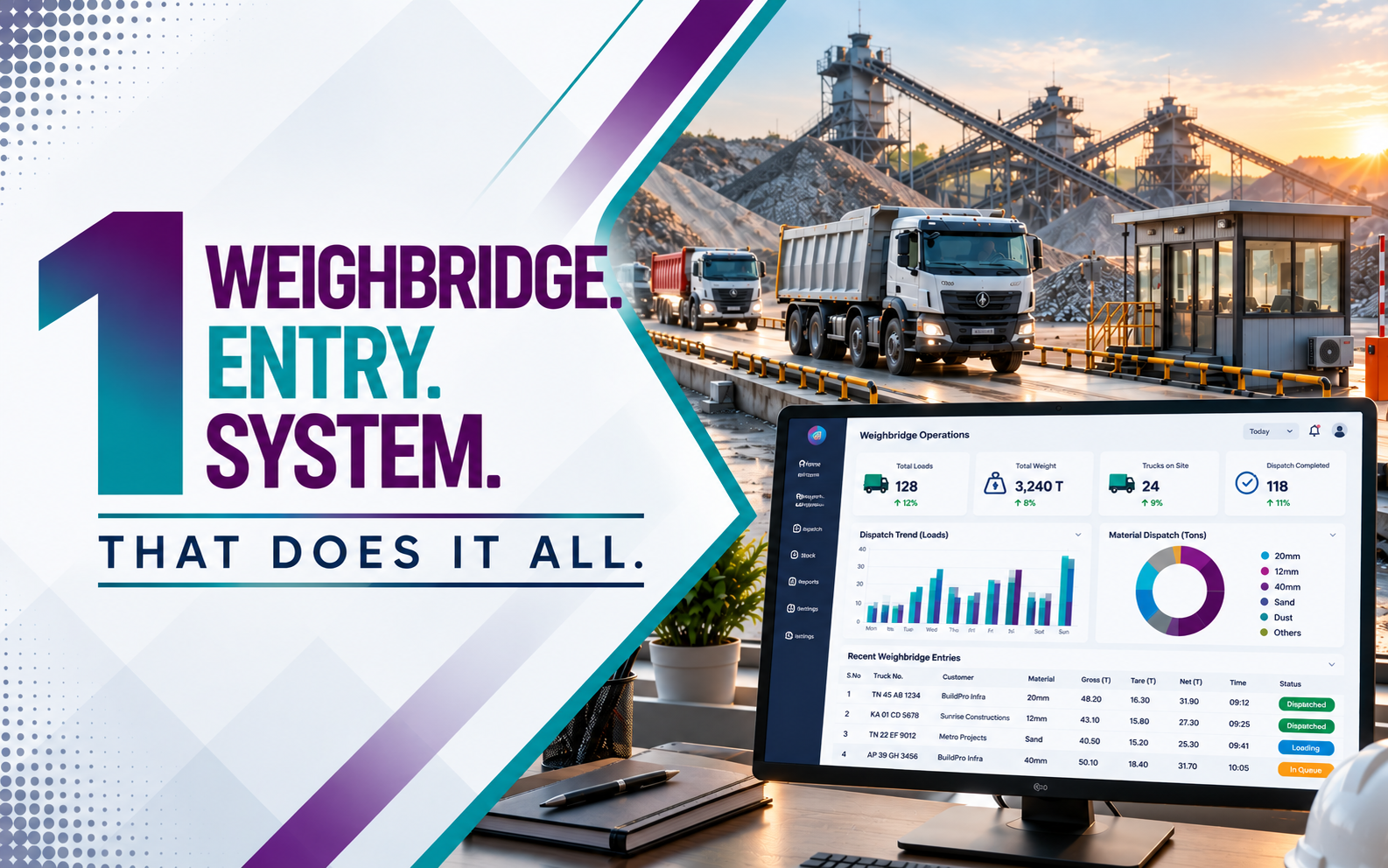
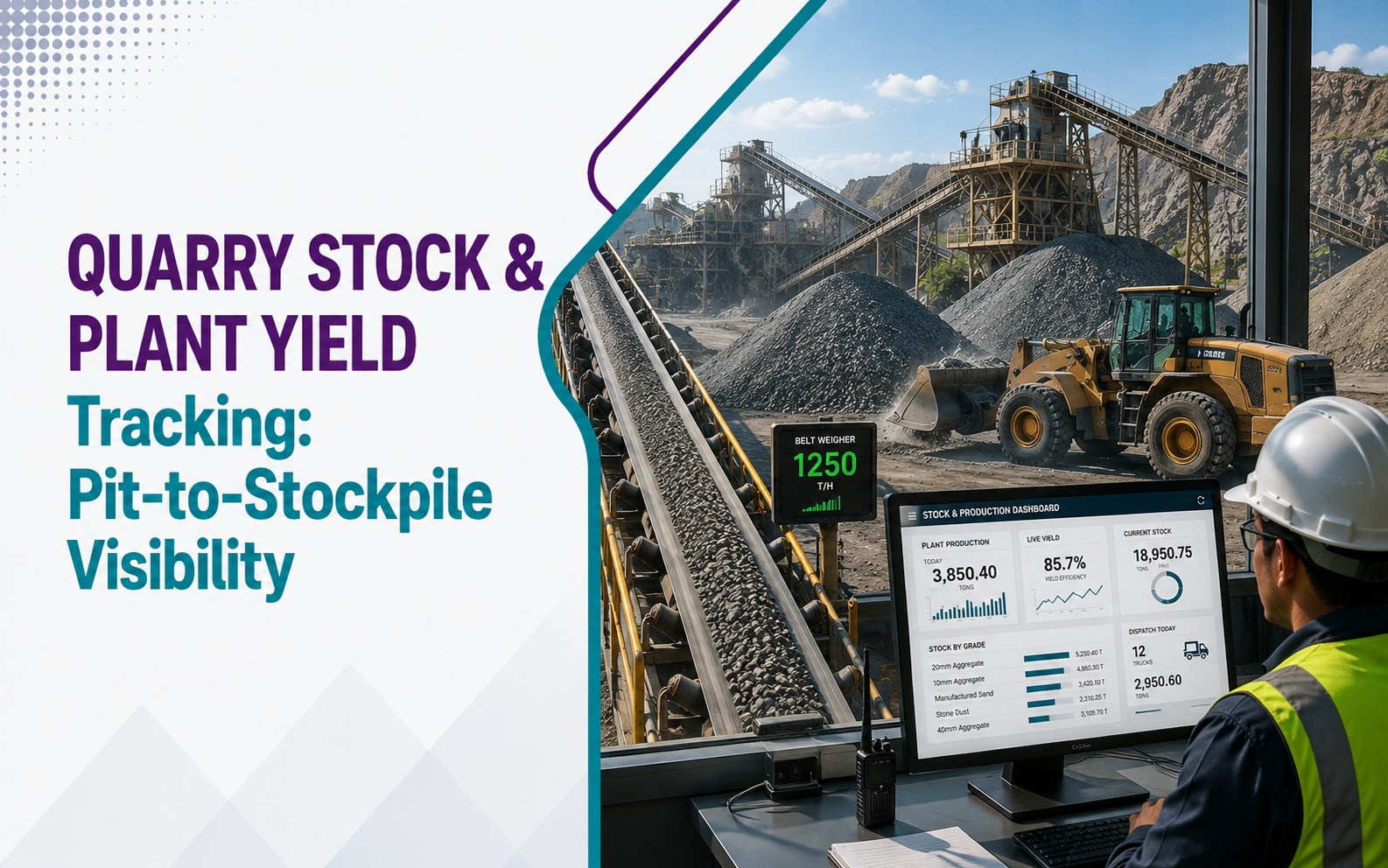
This is really an extension of a problem that starts much earlier in the process, at the point where a vehicle is weighed and that net weight is meant to carry straight through into the billing entry without anyone re-entering it by hand. Invoicing accuracy and timeliness are really just the downstream expression of that same data flow working correctly. Billing also isn't a standalone task, it's the final link in a much longer chain, and tracing that chain from the moment rock is blasted through to the invoice that closes out the transaction makes it easier to see why an invoice generated in isolation, especially after a truck has already left, is exactly the kind of disconnected step that chain is meant to eliminate.
What Software Can and Can't Do Here
It's worth being honest about the limits of any system in this area. An ERP that generates a compliant invoice automatically from accurate weighbridge and dispatch data, before the vehicle exits, removes a large amount of the manual work and the repetitive-error risk described above. What it doesn't do is replace the need for correct GST configuration in the first place, or the periodic filing and reconciliation work that remains an accounting responsibility. Automated invoice generation is a significant help toward staying compliant; it isn't a substitute for having your GST setup reviewed by someone qualified to advise on it, and nothing here should be read as tax or legal advice specific to your business.
Where GrowBiz ERP Fits In
This is the specific gap GrowBiz ERP's Quarry & Crusher solution addresses: invoices generated directly from the same verified weighbridge and dispatch transaction, rather than reconstructed later from a paper slip, so accuracy and timeliness are handled by the same process instead of two separate ones, and the vehicle isn't left waiting on documentation that should already exist by the time it reaches the gate.
To see how this fits into the bigger picture, take a look at how Codelayer's Quarry & Crusher ERP brings these pieces together, or step back and see how GrowBiz ERP works as one connected platform across RMC, brick manufacturing, and the other industries Codelayer works in.
Frequently Asked Questions
Is e-invoicing the same as GST billing software? Not quite. GST billing software generates an invoice with the correct tax calculation. E-invoicing is the additional step of submitting that invoice to the government's Invoice Registration Portal for authentication, which returns an Invoice Reference Number and QR code. Without that, the invoice generally isn't treated as valid under current e-invoicing rules for businesses above the applicable turnover threshold.
Does every quarry or crusher business need to generate e-invoices? This depends on your aggregate annual turnover, which is a threshold set and periodically revised by the GST authorities, currently ₹5 crore for e-invoicing applicability and ₹10 crore for the 30-day reporting requirement. It's best confirmed with your accountant, since applicability and reporting timelines have changed more than once in recent years.
Can an ERP system generate a compliant e-invoice on its own? An ERP can generate an invoice from accurate transaction data and submit it for authentication, which significantly reduces manual work. It still depends on the underlying GST configuration being set up correctly; that setup is an accounting responsibility, not something software alone resolves.
Why does the invoice need to be ready before the truck leaves, not after? Because the E-Way Bill required to legally move goods on the road is generated from the e-invoice. If a vehicle moves before a valid, IRN-bearing invoice exists, it's effectively traveling without proper documentation, which puts it at risk of penalties at a roadside check.
Why do invoice quantities sometimes not match the delivery record? This usually happens when invoicing is done separately from the weighbridge, based on a handwritten slip rather than the original weighment figure. Connecting invoice generation directly to the weighbridge transaction removes that gap.