Walk into the control room of a ready-mix plant on a busy morning and you will see something most owners take for granted. The batching system knows exactly how much cement, aggregate, water and admixture went into every batch. Then, in many plants, that knowledge stops at the screen. Someone prints a batch ticket, someone carries it to the office, and a third person retypes the figures into whatever handles stock and billing.
That gap between what the plant knows and what the business knows is what batching plant integration ERP is meant to close. This post explains what integration means, what goes wrong without it, and what to check before you trust a vendor who says they offer it. If the wider category is new to you, our guide to what RMC ERP software is covers the batching-to-billing chain this topic sits inside.
Your Plant Controller and Your ERP Do Different Jobs
The batching plant's own control software runs the machine. It doses materials, mixes the batch and keeps the plant operating safely. No ERP should try to replace it.
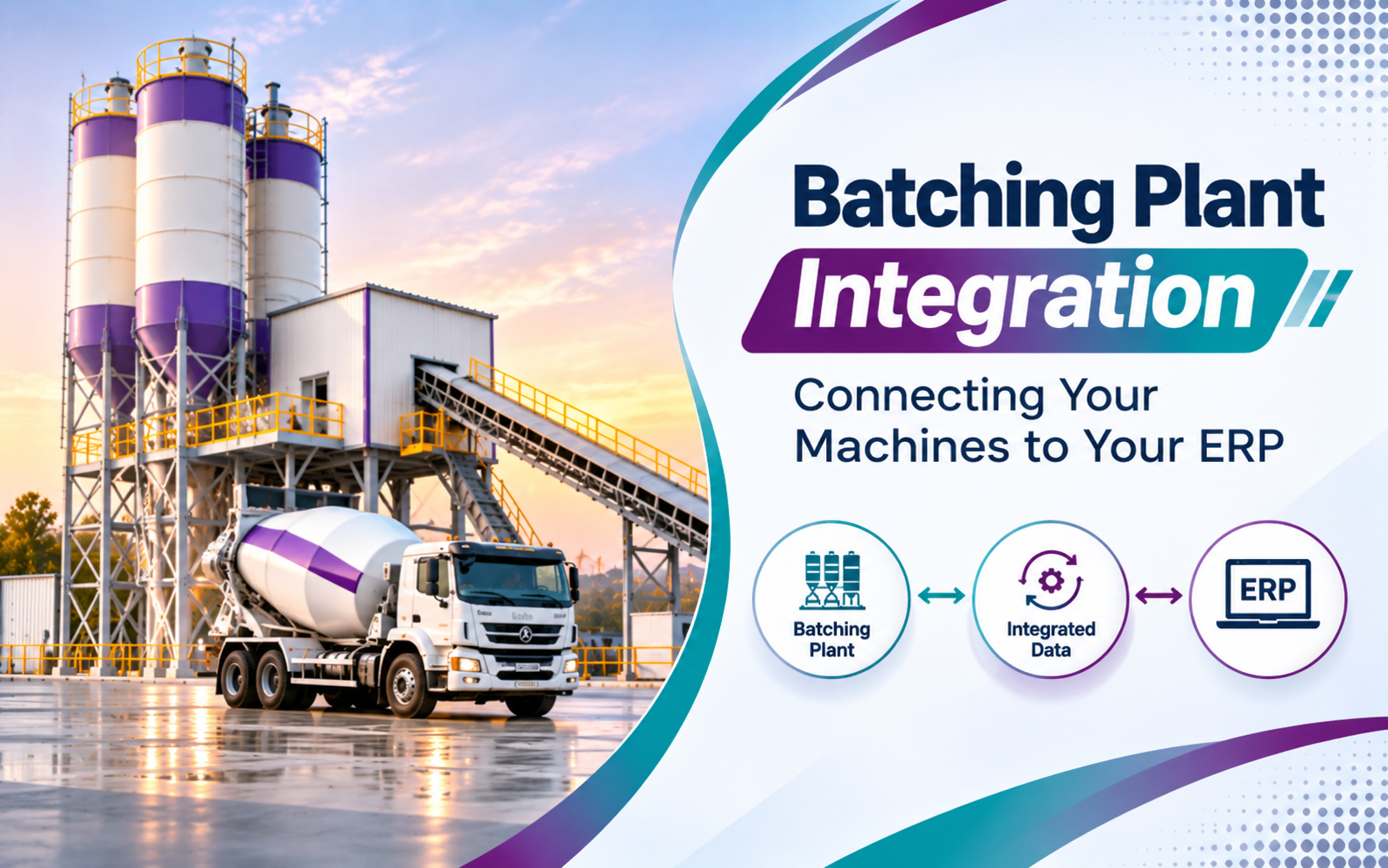
Integration is something else. The plant controls the mix, and integration makes the batch record usable by the rest of the business. The weighed quantities, the mix design selected, the time of batching and the order it belongs to all need to reach dispatch, stock, quality and accounts.
The controller asks, "Did the plant produce this batch correctly?" The ERP asks, "What does this batch mean for stock, delivery and the invoice?" Concrete batching plant software answers the first. An ERP answers the second, and only if the batch data reaches it.
What "Integrated" Actually Means
In plain terms, a plant is integrated when batch data reaches dispatch, stock and billing without someone retyping it from a printout.
In practice, the batch is linked to the sales order it was made for, so nobody matches tickets to orders by hand. Quantities of each material used are available to inventory as soon as the batch completes. Dispatch sees a ready batch without a phone call. And the figures on delivery paperwork and invoices come from the batch record itself, not from a copy of a copy.
Integration is not about replacing your plant. It is about removing the retyping step, and everything it causes.
What Breaks When the Plant Stands Alone
A plant running on its own system, with the office running separately, tends to show the same handful of problems.
Batch tickets get reconciled at the end of the day or week, so discrepancies are found long after anyone can explain them. Planned and actual quantities are compared only at month-end, if at all, so drift in how the plant doses a particular mix goes unnoticed for weeks. Material consumption is known late, so the cement or admixture figure in the office is always a little behind what the plant has really used.
None of this is carelessness. A person with a truck waiting will prioritise the truck over the paperwork. That is the right call on the day, and expensive afterwards.
From Batch Record to Inventory: Why Actual Consumption Matters
When batch data flows into inventory, the stock figure stops being an estimate. Each completed batch reduces the stock of every material it consumed, based on what was actually dosed, not on what the mix design said should have been dosed.
That difference matters for cost. A mix design is the intended recipe. Actual consumption is what the plant used. If the two drift apart, cost per cubic metre drifts with them, and a plant that only checks at month-end sees a surprise instead of a trend. Cement is usually the largest cost in a batch, so even a small over-dose is worth catching early.
It also makes purchasing sensible, because reorder decisions rest on real usage instead of someone walking the yard. Where raw materials arrive by road, the gate weighment feeds the same picture, which is why weighbridge integration in ERP is worth reading alongside this one.
Batch Accuracy and Delivery Documentation Are Two Different Needs
These two get blurred together, but they solve different problems.
Batch record accuracy is the plant side. Does the record show what was actually batched, with the right quantities, mix design and time, and can it be trusted later? This is the foundation. If it is wrong or missing, everything built on it inherits the error.
Delivery documentation is the customer side. Does the challan show what was delivered, to which site, in which vehicle, and does it agree with the batch it came from?
Integration serves both, in sequence. First the batch record has to be dependable. Then the challan and invoice can be generated from it instead of separately typed. Treated as one problem, plants fix the paperwork and leave the record untrusted.
What to Verify Before You Believe "Plant Integration"
Plenty of vendors say their system integrates with batching plants. These questions separate a real integration from a label.
- Does batch data arrive automatically, or does someone still export a file and upload it?
- Does it arrive when the batch completes, or on a schedule such as end of shift?
- Is each batch tied to its order and mix design without manual matching?
- Does completing a batch update material stock, or is stock adjusted separately?
- Can you open one batch from last month and see exactly what was dosed?
- When the connection drops, is data held and sent later, or lost?
A system that answers these well is doing real integration. One that answers most with "someone enters it" is a data entry screen with a plant icon.
An Honest Limit: Every Plant Is Assessed on Its Own
Whether a plant can be connected, and how, depends on its existing controller and the data it can output. Some plants are straightforward, others need more work. That is why compatibility is assessed per site, by looking at the actual plant. Anyone who promises every plant connects the same way, without having seen yours, is guessing.
Where GrowBiz ERP Fits In
GrowBiz ERP's RMC solution is built around the chain described above. Its documented scope includes batching plant and machine integration, weighbridge integration and material consumption tracking, connected to dispatch, delivery challans and billing, so the batch record is where the sequence starts instead of a printout someone retypes.
How that works at your plant is something Codelayer works out with you. Business Analysis & Consultation comes first: how your plant produces and records batches today, and what your controller can actually provide. Integration Services then connect the plant, the weighbridge and the rest of the system, with your team trained on the parts they use daily. We do not assume a particular plant make or model will work. We check yours.
To see how the full chain fits together, explore the GrowBiz ERP ecosystem to see how the same connected approach extends across quarry, brick manufacturing and the other industries Codelayer serves.